Matthew S. Evanusa
PhD · Lead ML Engineer · AI Researcher
True agency emerges from stateful memory coupled networks, not functions.
Research Philosophy
Dynamical Systems & Intelligence
Intelligence is not a static mapping from inputs to outputs. It emerges from the continuous evolution of internal state — adaptive, self-modifying dynamical systems that maintain coherent world models through time. My research treats neural networks as dynamical systems first, function approximators second.
Memory–Computation Separation
Traditional RNNs conflate memory storage with computation, limiting their capacity for long-horizon temporal reasoning. Maelstrom Networks address this by topologically separating a persistent memory substrate from a feed-forward readout mechanism, enabling continual learning without catastrophic forgetting.
Cognitive Architectures
Building machines that think requires more than scaling parameters. It demands architectures informed by cognitive science — persistent working memory, anticipatory cognition, self-referential state loops, and the temporal binding that gives rise to coherent experience. These are the building blocks of general intelligence.
From Research to Deployment
Theory without implementation is speculation. My work spans the full pipeline: from novel architecture design and mathematical analysis through prototype implementation to production deployment at scale. The gap between a research paper and a system that works reliably in the real world is where the real engineering happens.
Publications & Research
Building Stateful Agents That Remember
Current large language models are stateless — each interaction begins from scratch, with no persistent record of what came before. My research addresses this directly: I build agent architectures with durable, structured memory systems that accumulate knowledge over time. The goal is an agent that does not merely respond to prompts but maintains a continuously evolving internal model of its environment, its user, and itself. This means graph-based knowledge stores that reinforce with use, retrieval-augmented generation pipelines grounded in real experience, and control loops where memory feeds back into decision-making. The practical result is agents that get better the longer they run — systems that can plan over extended horizons, recall relevant context without being told, and adapt their behavior as the world around them changes.
PhD in Computer Science — University of Maryland
Perception and Robotics Group · Advised by Yiannis Aloimonos · 2015–2024
My doctoral work in the Perception and Robotics Group under Professor Yiannis Aloimonos investigated a question that most neural network research sidesteps: how do you give a network a working memory that persists and evolves, rather than resetting with every forward pass? The thesis, “Towards Thinking Machines,” developed a series of architectures — from deep reservoir networks and spiking neuronal systems to the culminating Maelstrom Networks — that treat neural computation as a dynamical system with separable memory and readout components. This line of work produced two patent filings (t-ConvESN and Maelstrom), an ICLR Spotlight co-authorship on Network Deconvolution, publications at IROS, ICANN, CVPR Workshops, and SN Computer Science, and the Intel Best Project Award at the Telluride Neuromorphic Workshop for spiking network implementations on the Intel Loihi chip.
Maelstrom Networks
Maelstrom Networks are a hybrid recurrent architecture that topologically separates a persistent memory substrate from a feed-forward readout mechanism. Standard recurrent networks conflate memory storage with the computation that reads from it — the hidden state is simultaneously the network's memory and its processing medium. This conflation caps their capacity for continual learning and long-horizon temporal reasoning. Maelstrom Networks break this coupling: a dynamical reservoir maintains state across arbitrary time scales while a trained readout maps from that state to outputs, with no gradient signal flowing back into the reservoir. The result is a system capable of online learning without catastrophic forgetting, suited to embodied AI settings where data arrives as a continuous temporal stream rather than shuffled batches.
t-ConvESN: Temporal Convolution-Readout for Random Recurrent Neural Networks
Evanusa, M. S., Patil, V., Girvan, M., Goodman, J., Fermüller, C., & Aloimonos, Y.
ICANN · 2023Patent Filed
ProtoVAE: Prototypical Networks for Unsupervised Disentanglement
Patil, V., Evanusa, M., & JaJa, J.
arXiv:2305.09092 · 2023
Deep-Readout Random Recurrent Neural Networks for Real-World Temporal Data
Evanusa, M., Shrestha, S., Patil, V., Fermüller, C., Girvan, M., & Aloimonos, Y.
SN Computer Science · 2022
DoT-VAE: Disentangling One Factor at a Time
Patil, V., Evanusa, M., & JaJa, J.
ICANN · 2022
SpikeMS: Deep Spiking Neural Network for Motion Segmentation
Parameshwara, C. M., Li, S., Fermüller, C., Sanket, N. J., Evanusa, M. S., & Aloimonos, Y.
IEEE IROS · 2021
Deep Reservoir Networks with Learned Hidden Reservoir Weights Using Direct Feedback Alignment
Evanusa, M., Fermüller, C., & Aloimonos, Y.
ArXiv · 2020
A Deep 2-Dimensional Dynamical Spiking Neuronal Network for Temporal Encoding Trained with STDP
Evanusa, M., Fermüller, C., & Aloimonos, Y.
arXiv:2009.00581 · 2020
Network Deconvolution
Ye, C., Evanusa, M., He, H., Mitrokhin, A., Goldstein, T., Yorke, J. A., ... & Aloimonos, Y.
ICLR · 2019Spotlight
Event-Based Attention and Tracking on Neuromorphic Hardware
Evanusa, M., & Sandamirskaya, Y.
IEEE/CVF CVPR Workshops · 2019
Learning Spatial Models for Navigation
Epstein, S. L., Aroor, A., Evanusa, M., Sklar, E. I., & Parsons, S.
COSIT · 2015
Experience
Lead Machine Learning Engineer
Sylogic · San Jose, CA
- ›Architected multi-agent orchestration system with chain-of-thought reasoning pipelines for complex code generation tasks
- ›Deployed autonomous coding agents to enterprise clients, delivering 40+ automated pull requests with production-quality code
- ›Designed MongoDB-backed RAG system for persistent agent memory and contextual reasoning
- ›Led successful technical delivery for Fortune 500-scale enterprise clients under compressed timelines
Researcher
US Naval Research Laboratory · Signals Division TEWD
- ›Development and testing of novel temporal neural networks for real-world, deployable signal ML tasks for the US Navy
- ›Deep model hyperparameter optimization for production-grade deployment
- ›Filed patent for t-ConvESN temporal convolution-readout architecture
PhD Researcher
University of Maryland, College Park · PRG Lab, Dept. of Computer Science
- ›Developed Maelstrom Networks — a hybrid recurrent architecture separating memory from computation for embodied AI and continual learning
- ›Co-authored ICLR Spotlight paper on Network Deconvolution (2019)
- ›Awarded Intel Best Project at Telluride Neuromorphic Workshop for spiking neural network work on Intel Loihi chip
- ›Published 11+ papers across ICLR, IROS, ICANN, CVPR Workshops, and journals
Post-Bac Researcher
Epstein Lab, CUNY Hunter College · New York, NY
- ›Researched cognitively inspired algorithms for robot navigation
- ›Published at COSIT 2015 on spatial learning models
Code
Code Assist Extensions
MCP server giving AI coding assistants the ability to shop. 16 tools with Playwright browser automation, AI element resolution, and human-in-the-loop checkout. Works with Claude Code, Codex CLI, and Gemini CLI.
Python / MCPEmail Agent
LLM-powered email daemon for remote Linux server administration. Send natural language commands via email, get structured results back. 27 tools across system, git, docker, network, and more.
PythonSPYKE
A spiking neural network library for spiking and reservoir networks. CUDA-accelerated.
CUDA / PythonConvESN
Multi-channel 1D convolutional echo state network — the architecture behind the t-ConvESN patent.
PythonMusic
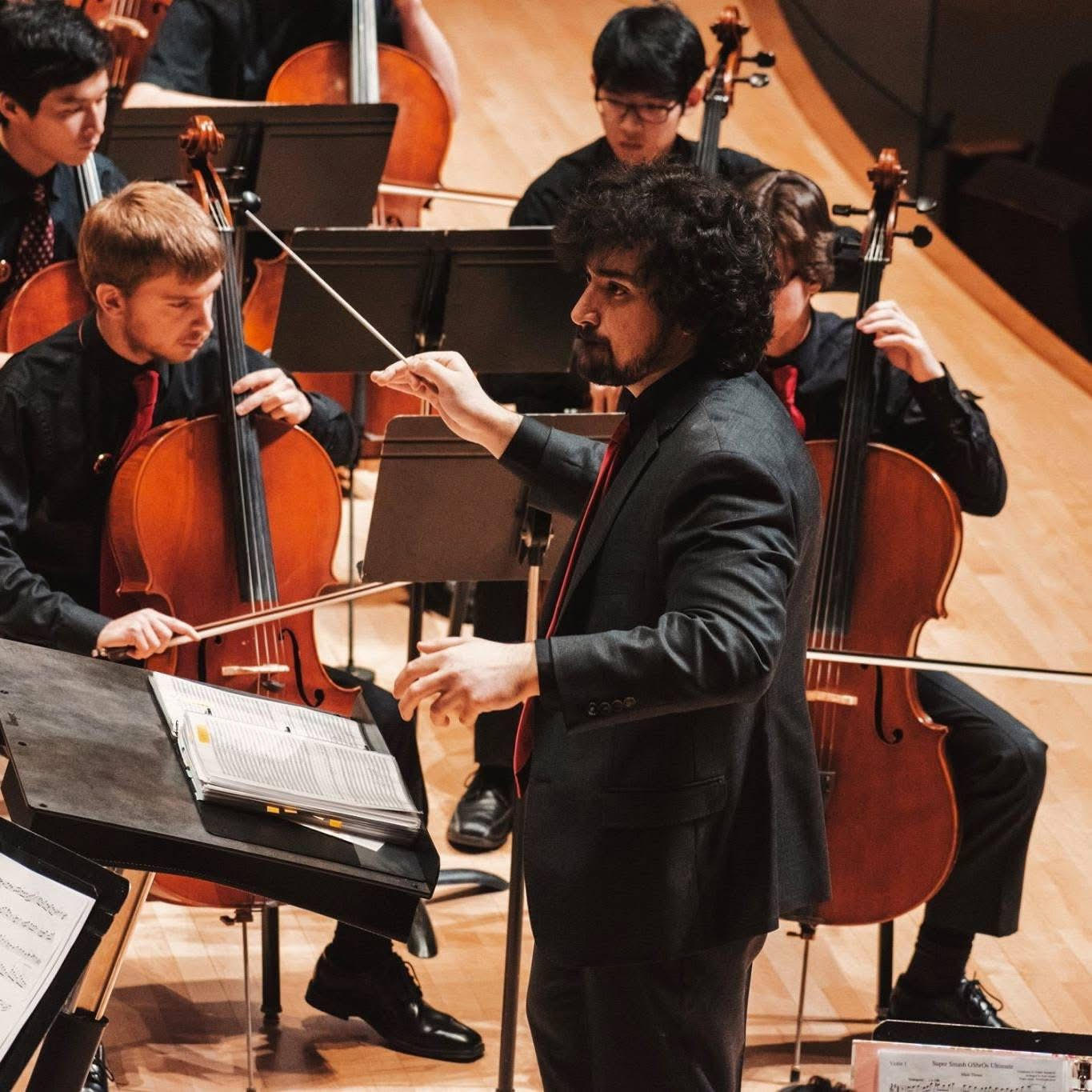
Music has been a lifelong parallel to my research — both demand pattern recognition, temporal reasoning, and the coordination of complex systems. I've been fortunate to pursue it seriously across multiple disciplines.
Conducting
Orchestral and choral direction
Singing
Classical vocal performance
Cello
Orchestral and chamber music
Piano
Solo and accompaniment